
Healthy Habits for Life: My Personal Approach to Nutrition, Exercise, and Rest
Introduction
Thank you for visiting this page.
Here, I share the habits that have shaped my relationship with food, movement, and health throughout my lifetime.
What follows is not a system designed to be copied, nor a model meant to be followed faithfully.
The healthy habits for life I describe here are the result of long observation, discipline, and gradual refinement—habits that formed quietly, long before I understood how to name them.
They began in childhood and matured through experience.
Over time, they became less about effort and more about orientation — a way of living that values balance, restraint, and continuity rather than intensity or novelty.
I share them not to instruct, but to give context to how I think, eat, move, and rest.
Habits, Time, and Daily Structure
The way we move forward in life is dictated largely by our daily habits.
One of the earliest habits I adopted—without knowing its physiological significance—was respect for rest.
As a child, I watched my mother rest every afternoon.
That pause relieved the body from gravity, allowed recovery, and extended energy into the evening hours. The body, given time, knew what to do.
For many years, my daily rhythm followed a simple structure: waking early, sleeping early, and, when possible, resting at midday.
Life, professional obligations, and raising three boys naturally disrupted this rhythm at times.
Discipline, however, does not mean rigidity. It means returning to structure once disruption passes.
Today, my biological clock remains steady. I wake early and sleep early, regardless of season, vacation, or circumstance.
Looking back, I understand that this consistency quietly supported my physical health, mental clarity, and inner balance—long before I was aware of circadian rhythms or biological clocks.
From this experience, one rule stands out clearly:
One well-established healthy habit is capable of influencing many others.
This is how healthy habits for life are built—one non-negotiable choice at a time.
What I did not understand then, but understand clearly now, is the constant role of gravity in daily fatigue.
From the moment we stand, gravity places uninterrupted pressure on the body—on the spine, the joints, the organs, and even at a cellular level.
The body spends the entire day resisting this force.
Rest, especially when the body is horizontal, temporarily removes this burden.
Blood circulation changes, muscular tension decreases, and the nervous system is allowed to recalibrate. This is not indulgence, but it is a form of maintenance.
Modern life leaves little space for this kind of recovery. We sit, we stand, we move—but rarely do we truly unload the body.
Over time, this continuous exposure accumulates quietly. What appears as fatigue, stiffness, or irritability is often the simple result of never stepping outside gravity’s demand.
Respecting rest is therefore not about laziness or comfort.
It is one of the most fundamental healthy habits for life, because it restores the body to a neutral state from which strength, clarity, and balance can re-emerge.
Teaching and Motivation by Example
In this process, I never looked for followers.
Motivation does not come from instruction alone. It emerges through example.
I never pressured my children to exercise. They exercised because they saw their father exercising consistently.
I never dictated what they should eat. Food preparation became a shared process—collective, curious, and experimental.
Through this process, they learned discernment rather than obedience.
We tried new things, exchanged views, and adjusted. Habits formed naturally, without force.
This, to me, is the most reliable way habits endure: lived quietly, not announced.
Mediterranean Diet—or Mediterranean Excuses?

Good health is never protected by labels.
The Mediterranean diet is often spoken of as a guarantee of well-being.
Yet obesity rates in Mediterranean countries suggest otherwise. Culture alone does not preserve health. Choices do.
Good nutrition has no borders.
Anyone who regularly chooses highly processed foods, sugary drinks, or excess alcohol will eventually face consequences—regardless of geography or tradition.
In my own cooking, I rely on familiar, humble ingredients: vegetables, legumes, fish, olive oil, garlic, onion, and hot pepper.
These ingredients are neither exotic nor expensive. Their value lies in consistency.
One personal rule is worth stating clearly:
I never cook with olive oil. It is always served raw.
This preserves its nutritional value and allows each person to adjust quantity and taste individually.
Raw olive oil complements almost everything when used with care.
Nutrition, practiced this way, becomes one of the most stable healthy habits for life—simple, repeatable, and sustainable.
My Eating Habits (Indicative, Not Prescriptive)

What follows reflects variety, season, and mood rather than a fixed plan.
Beverages
Cocoa powder, green tea, ginger tea, cinnamon with cloves, lemon juice, orange juice.
Salads and Cold Dishes
Greek salad, raw spinach with feta, beets, carrots, cauliflower, broccoli, potato salad, eggplant salad, tzatziki, skordalia, taramas.
Legumes and Stews
Lentils, beans, chickpeas, black beans, cabbage with rice, dolmades, fish soup, pork with spinach or potatoes, chicken with rice.
Oven and Grilled Dishes
Chicken or pork with potatoes, fish with onions and tomatoes, minced meat roll, sardines, kebabs, souvlaki, grilled vegetables, bread baked with fresh olive oil.
Garlic and hot pepper accompany almost all dishes. Olive oil is always served raw, according to individual preference.
These foods are not rules. They simply reflect how variety and simplicity coexist in daily life.
Gymnastics, strength, and the number 300
My relationship with exercise developed before modern information tools were available.
Books, observation, and practice shaped my understanding. A trained eye—a coach or gymnast—always mattered more than written instruction.
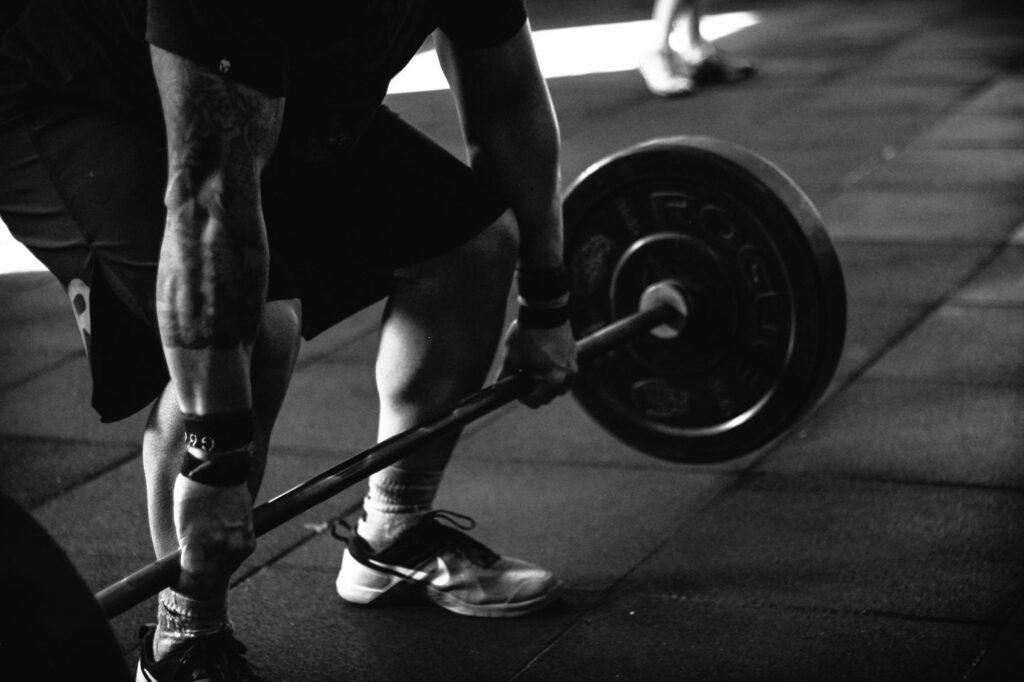
Today, my training is distilled into a single structure: 300 repetitions of one exercise per session.
The number 300 is not symbolic for me; it is practical. It represents the minimum time my body requires to transition from cold to capable.
Short sessions may stimulate, but they do not prepare. The first portion of the session functions as a warm-up—joints loosen, circulation increases, and movement becomes fluid rather than forced.
Only after this phase does meaningful work begin. Strength, in my experience, is not built through isolated intensity but through sustained tension applied with control.
Time under tension allows muscles to adapt without shock and reduces the risk of injury, especially as elasticity changes with age.
This is also why I do not rush recovery. Hanging from the chin-up bar removes spinal compression, counters gravity once again, and allows the body to reset after effort.
Training ends not with exhaustion, but with decompression.
Exercised this way, movement supports longevity. It becomes one of the healthy habits for life that preserves independence, confidence, and physical autonomy.
The exercise changes—legs, pushing, pulling—but the structure remains.
Repetitions are performed using body weight, resistance bands, or weights, with controlled rest intervals. The session lasts approximately one hour and fifteen minutes.
There are no distractions. No mobile phones. Only a timer measures rest periods.
This method is demanding and not suitable for beginners.
It emerged after many years of adaptation and serves one purpose: preserving strength as time advances.
Strength, more than volume, becomes essential with age.
Warm-up occupies the early phase of training. Tension increases gradually. Recovery is not optional.
My personal recovery practice is simple: hanging motionless from a chin-up bar for two minutes, repeated three times. Recovery restores muscle tension and elasticity and is as essential as the exercise itself.
When practiced consistently, strength training becomes one of the most reliable healthy habits for life, supporting independence, balance, and resilience.
Closing Thoughts
Looking back, many of these choices were made intuitively, without scientific framing or terminology. Only later did I understand their cumulative effect.
If I were to summarize my approach in a single line, it would be this:
Nutrition, movement, and rest form the foundation of well-being.
These healthy habits for life become more important — not less — as age progresses.
Thank you for staying until the end.
Disclaimer: The information shared here is based on personal experience and publicly available research and is intended for educational purposes only. It should not replace advice from a qualified healthcare professional. Please consult a certified nutritionist, physician, or other licensed expert before making dietary, exercise, or fasting-related changes, especially if you have existing health conditions. The habits discussed are examples, not prescriptions, and readers are encouraged to review the referenced sources and make informed decisions for their own health.